
Image Credit: Unsplash
A child-safe family bathroom starts with a few practical changes at floor level, around the bath and inside easy-to-reach cupboards. Water, smooth surfaces and busy morning routines can create risks, but most are straightforward and inexpensive to reduce. Regular checks are useful too, as children grow quickly and can suddenly reach handles, shelves and products that were previously out of bounds.
Spotting Hidden Hazards
Look at the bathroom from your child’s height. Low cupboards, toilet lids, trailing electrical leads and cleaning products beside the loo may all attract curious hands. This guide to hidden bathroom hazards highlights how everyday shared spaces can contain risks that adults easily overlook.
Fit child-resistant catches to low storage and move medicines, toiletries, razors and cleaning products to a high locked cupboard. Unplug hairdryers and styling tools after use, then store them away from water. Check that wall-mounted cabinets, towel rails and shelving are firmly attached, since children may pull on them when trying to stand. Keep the toilet lid closed and consider a simple lid lock for toddlers.
Secure the Tub Surface
A smooth bath or shower base becomes much more slippery once soap and shampoo enter the water. Add a mat that covers the main standing area and check that it grips properly before each bath. Purpose-made non slip bath mats are available in different sizes, making it easier to cover the section your child uses without bunching material around the plughole.
Lift the mat after bathing, rinse away soap residue and leave it to dry. Clean underneath it regularly because trapped residue can weaken its grip. Encourage children to sit during baths and keep one hand close to babies and toddlers at all times. The practical advice in this child bath safety guide also stresses close adult supervision around the tub.
Keep Hot Taps Under Control
Run cold water first, add hot water gradually and mix it thoroughly before your child gets in. Test the water with the inside of your wrist or elbow, where your skin is more sensitive. A bath thermometer offers a clearer reading and removes the guesswork, especially when different adults share bath-time duties.
Turn tap handles fully off and teach older children to ask before adjusting them. If your taps become extremely hot to the touch, covers can help protect small hands from contact. A thermostatic mixing valve may also limit the temperature reaching the tap, though it should be selected and fitted by a suitably qualified professional. Never leave a bath filling unattended, even for a minute, as both the depth and temperature can change quickly.
Tidy Up Wet Floor Clutter
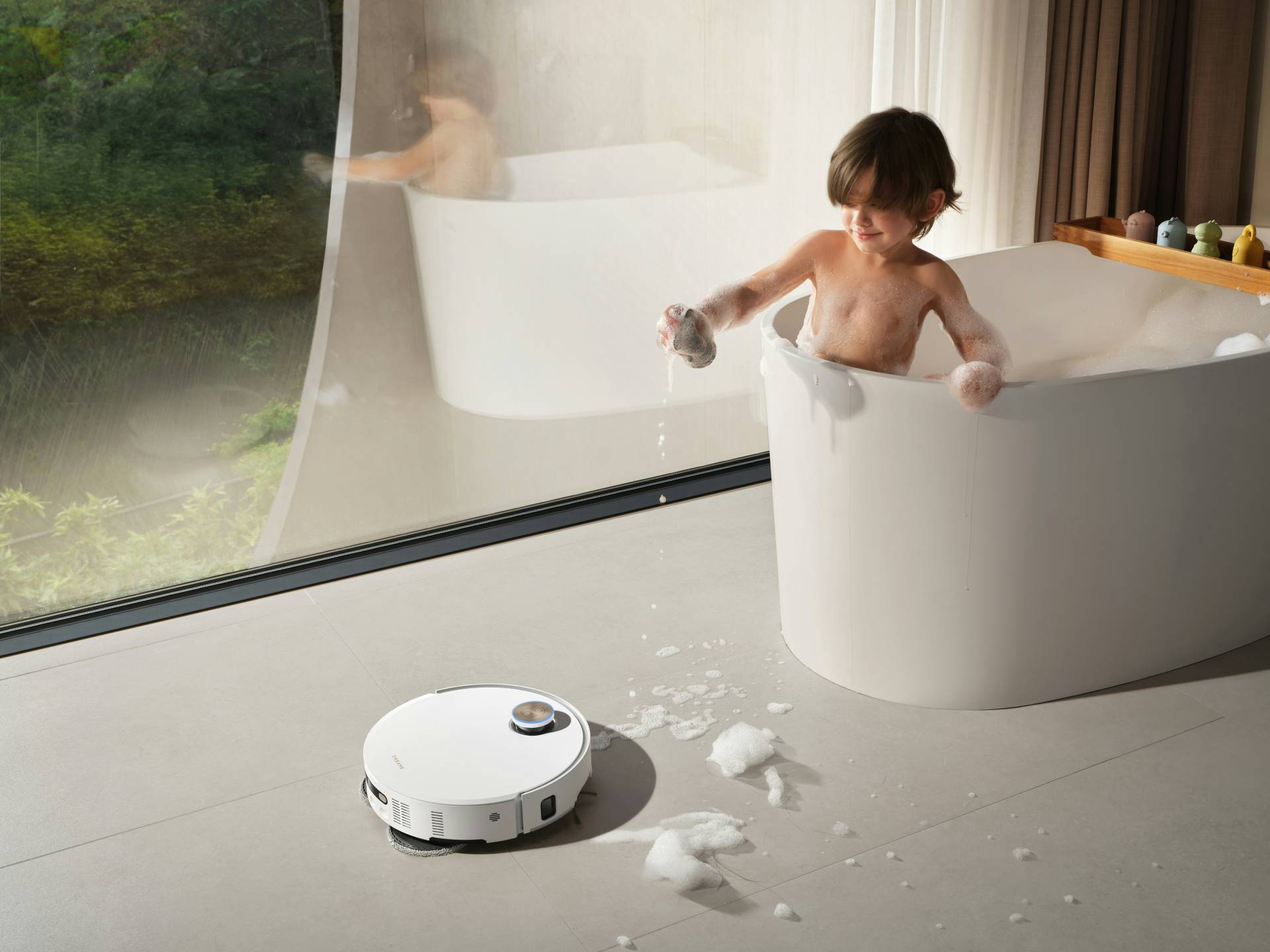
Clear the floor before turning on the taps. Laundry, bath toys and discarded towels create obstacles, while splashes can make tiles hard to cross safely. Put a washable basket near the bath for toys and give used towels a hook that children can reach without climbing. A small laundry hamper can stop pyjamas and socks ending up underfoot.
Keep an absorbent mat beside the bath and hang it to dry after use. Mop up puddles as soon as they appear, paying close attention to the area around the toilet and sink. If your child uses a step stool, choose one with a broad base and non-slip feet, then store it against a wall when it’s not needed. Replace it if the rubber grips crack or begin to peel.
Once the room is set up, repeat a quick floor-and-tap check before every bath. That brief habit catches loose mats, stray toys and unexpectedly hot water before your child enters the room.


